
A coffee date is a low-commitment first meeting — usually 30–60 minutes, sober, in a public space — designed to answer one question before either person invests more: is there enough connection here to warrant a real date? It’s not a lesser date. It’s a more honest one.
The split opinion is real. One camp says coffee is for interviews and networking. The other says anyone who can’t enjoy a conversation over coffee isn’t the right person anyway. Both sides are missing the point.
The problem isn’t coffee — it’s that early dating has become a performance, and the coffee date refuses to play along. What real people figured out on their own, and what the dating advice industry has mostly ignored, is a frame that changes everything: Date Zero. What this article covers is what that frame actually means, why it makes particular sense for app dating, and how to use it — from where to go to how to extend the date when it’s working.
TL;DR
- A coffee date is Date Zero — a pre-date designed to find out if connection exists before either person invests more.
- It works especially well for app dating, where in-person chemistry can’t be assessed from photos and text alone.
- The format is easy to exit if things aren’t working and easy to extend when they are — that flexibility is the feature.
What “coffee date” actually means
The format matters more than the drink. Coffee date doesn’t mean coffee is required — it means sober, public, daytime (or early evening), open-ended on time.
Tea works. A walk works. A juice bar works. What defines it is what it’s designed to do: give two people a low-commitment first meeting to find out if there’s anything worth pursuing.
This functional definition reframes the whole conversation. Once you understand what a coffee date actually is — not a downgraded dinner but a different kind of meeting — the complaints about it mostly dissolve. For more on how format shapes early dating, see our guide on first date ideas that actually build connection.
Why “Date Zero” is the right frame for a coffee date
The most useful framing is simple: think of it as Date Zero. Not a first date with the effort dialed down — a pre-date that earns the right to a real one.
This reframe dissolves the biggest objection: that low investment signals low interest. It doesn’t. It signals that you’re efficient rather than performative. The dinner date with candles and a wine list is romantic precisely because both people have already decided they like each other.
Date Zero comes before that decision, and it shouldn’t try to be something it isn’t. There’s a legitimate counterpoint: coffee carries a business-world association that some people find genuinely unromantic. That’s not wrong — and it’s fine. Romance isn’t the goal yet.
You’re screening, not performing. The time for manufactured atmosphere is after you’ve established that there’s something worth manufacturing it for. The dinner with candles comes later — after Date Zero has answered its question.
Why coffee dates make particular sense for app dating
This is the gap most dating content doesn’t cover. App dating means meeting a high volume of strangers whose real-life presence you can’t assess from photos and text. The best conversation on Hinge doesn’t tell you whether there’s an in-person spark. The most attractive profile photos don’t tell you how someone holds themselves or whether they make you laugh.
Coffee is the cheapest, fastest, lowest-stakes way to find that out. The uncertainty that makes an expensive first date feel like a gamble is exactly what makes the Date Zero format rational. The version of this that plays out regularly: coffees are nearly done, neither person wants to leave, someone says “are you hungry?” — and the date continues because it earned the continuation. That’s not a rescue from a failing date; it’s a date that’s working.
The safety and anxiety angle (it isn’t gender-neutral)
Most advice pitches the “easy exit” as mutual convenience. That’s not the whole story.
The safety and anxiety benefits of a coffee date are disproportionately valuable to women. Public, daytime, sober, no shared bill pressure — these aren’t just nice features. For someone meeting a stranger from the internet, they’re meaningful structural protections.
The appeal here isn’t abstract. It’s that a coffee shop in the afternoon is a genuinely safer setting than a bar at night, and a lot of women know exactly why that matters.
It’s also worth naming the anxiety piece separately. For people who experience real anxiety around first dates, the coffee format is easier to show up for. There’s no pressure to dress for a dinner. There’s no social contract to stay for two hours.
The exit is built in, which makes the arrival less fraught. That’s not a small thing.
How long should a coffee date last?
30–60 minutes is the standard. It can run shorter if the vibe isn’t there — a coffee date ends without the awkwardness of waiting for a check or signaling to a server. It can run longer if things are going well, and “longer” can mean two more hours at the same table or transitioning somewhere else entirely.
The flexibility is the feature. Unlike dinner, there’s no social contract that locks you in. The exit is built into the format. The extension, when it happens, is earned — which means it actually means something when it does.
Where to go — use the room
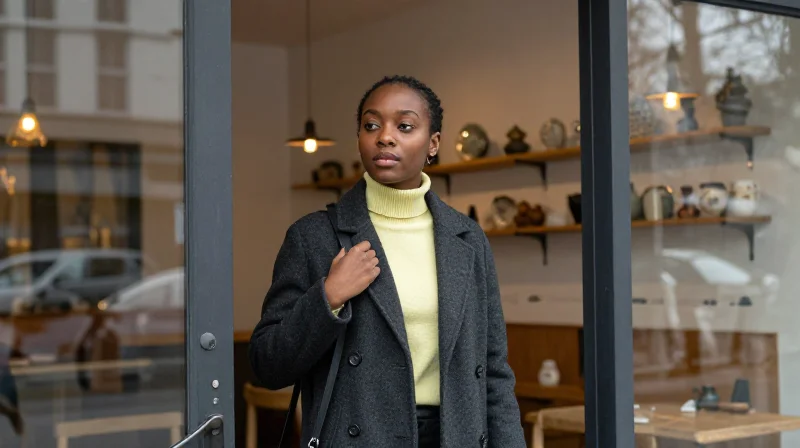
Skip the generic “cozy, quiet spot” advice. The actionable version: choose somewhere with character. Interesting art, unusual décor, a bookshop café, somewhere with something worth commenting on. The space becomes conversation material.
A practically useful tactic: “What do you think of the interior — is it you?” This works because ambient observations are lower-stakes than direct personal questions — you’re both reacting to a third thing, which reduces the interrogative pressure of the early minutes. It sounds simple, but it reveals taste, prompts a real response, and signals that you’re paying attention to your surroundings rather than just staring at your phone. A generic chain café doesn’t give you this.
Arrive a few minutes early and pick a seat with good sightlines and something nearby worth pointing at.
For more ideas on how physical settings shape early conversations, see our guide to first date ideas.
What to actually talk about
Most advice on coffee date conversation is vague. What actually works:
- Ask about something specific from their profile or messages. It signals you were paying attention, not just running through a script.
- Use hypothetical questions — “If you could move anywhere for a year, where?” — because they reveal how someone thinks, not just what they’ve done.
- Use the room: the art, the music, the other people. Observation generates conversation that feels natural rather than interrogative.
- Ask about past experiences rather than current status. “What’s the most interesting thing you did last year?” opens more than “What do you do?”
- Say something real yourself. Most people treat a first coffee like an interview because they’re nervous — asking questions feels safer than volunteering information. But the goal isn’t to evaluate your date; it’s to find out if you like how they think, and that’s only possible if you show them how you think.
One honest check: if the conversation is going well, you’ll lose track of time. If you’re actively tracking how much time is left, you have your answer.
When it’s going well — the mechanics of extending the date

Nobody covers the specific transition moment, so here’s how it actually works:
- Before the date: Identify one or two nearby places worth going — a bar, an exhibition, a good walk. This isn’t about having a plan; it’s about having options ready when you want them.
- During the date: Mention one of these places naturally in conversation. “Have you been to that place around the corner with the weird taxidermy?” Plants the seed without pressure.
- At the right moment: When the coffees are nearly finished and the energy is still good, pause and offer simply: “Shall we go somewhere else?”
- If they decline: That’s fine and not necessarily the end. “Another time, then” leaves the door open without pressure. Don’t push.
- If you’re the one who wants to leave: The built-in time structure of a coffee date is your friend. Coffee naturally ends. You’re not abandoning a meal.
Is a coffee date a red flag?
For some people, yes — and that’s a legitimate answer. The business-world association is real. If someone has made clear they find coffee dates unromantic and you suggest one anyway, that’s a mismatch in expectations, not a personality flaw on their part.
For most people the honest answer is: it depends what you’re optimizing for. If you want a date that signals investment before you’ve established connection, coffee will feel like a downgrade. If you want a low-stakes chance to find out if there’s actually something there, coffee is the most rational choice available.
Some people know they don’t like coffee dates, and that’s useful information — not a failure on anyone’s part. The question isn’t whether coffee dates are romantic — it’s whether you’ve found someone whose idea of a good time starts with a real conversation. See our guide to first date ideas for more on how to read the situation.
The real reason coffee dates work
The anxiety around suggesting a coffee date reveals something broken about how early dating gets framed — as a performance where the effort you put in proves how much you care. By that logic, spending more money and more time signals more interest. But it also means more pressure, more artificiality, and a worse read on whether two people actually like each other.
The coffee date refuses that logic. It says: let’s find out if there’s something here before we perform for each other. That’s not low effort. That’s honesty about what the early stages of dating actually are.
The right person for you isn’t going to be put off by coffee. They’ll be relieved.
Frequently asked questions
What does a coffee date mean?
A coffee date is a low-commitment first meeting — usually 30–60 minutes, sober, in a public place — designed to see if there’s enough connection to warrant a real date. Think of it as Date Zero: not a first date with the effort dialed down, but a pre-date that earns the right to one.
Is a coffee date a red flag?
Not inherently. It can signal low interest, but it more often signals practicality. Context matters: a coffee date after weeks of good conversation is different from an immediate downgrade from dinner to coffee with no explanation.
What is the 3-3-3 rule for dating?
The 3-3-3 rule suggests waiting three days before texting, going on three dates before deciding, and giving each relationship three months before evaluating seriously. It’s a framework for patience rather than urgency — coffee dates fit naturally into the early stages of that process.
Are coffee dates a good idea?
Yes, especially for first meetings from apps. They’re low stakes, easy to exit if the chemistry isn’t there, and easy to extend if it is. The lack of alcohol and financial pressure also makes it easier to get an accurate read on who someone actually is.