Dating in your 50s is genuinely harder than most advice articles admit — and the reason has less to do with you than with the composition of the pool you’re entering. The dating market after 50 has been filtered over decades, and understanding that distinction changes everything about how you approach it.
Most of the optimism you’ll find elsewhere is real, but incomplete. You do know yourself better. Your tolerance for bullshit is lower, which saves time. But that self-knowledge gets tested against a market with structural problems that no amount of personal growth or app optimization actually fixes. That’s the starting point nobody gives you — so here it is.
TL;DR
- The dating pool after 50 is harder not just because it’s smaller, but because its composition skews toward people with unresolved availability issues.
- The specific emotional cost is near-ideal turning bad — not obvious mismatches spotted early, but connections that seemed right and then weren’t.
- People who find someone share a posture: directness over strategy, specific self-knowledge, and firmness about actual deal-breakers.
The Pool Is Smaller — and That’s the Lesser Problem
The smaller size of the dating pool after 50 is the obvious thing. It’s also not the real problem. The harder reality is the composition of that pool — and it’s something people who’ve been in it for a while all eventually say out loud.
A disproportionate share of single people in their 50s are single because healthier, more securely attached people paired off and stayed paired. What remains is weighted toward people with unresolved addictions, attachment disorders, long histories of failed relationships, or emotional availability problems that never got addressed. That’s not an insult to anyone in the pool — it’s a structural fact about how life filters people out over time.
This is what people who’ve actually re-entered dating after years away discover after a few months of real attempts: it’s not just that there are fewer options, it’s that the ratio of genuinely available people — present, processed, ready — is lower than the overall numbers already suggest. There are good people out there. It’s just a much deeper dig.
- The people who gave up and aren’t dating don’t show up in the data
- Survivors of long marriages that ended well are less likely to re-enter quickly
- People with the fewest relationship skills are often the most actively available
None of this is permanent — people work on themselves, timing changes. But going in expecting otherwise will get you hurt faster than anything else.
The Confidence Is Real — but It Doesn’t Work the Same for Men and Women
Self-knowledge is a genuine advantage at this age. Multiple accounts from people dating in their 50s describe it independently: you know what you want, you know your deal-breakers, you stop performing for people who aren’t right for you. That’s real and it matters.
But the experience isn’t symmetric, and dating in your 50s as a woman looks different from the male experience. Women in their 50s report feeling more secure in who they are than at any earlier point — and they simultaneously report being evaluated openly on their bodies by men comparing them to younger alternatives. Being brimming with self-confidence doesn’t insulate you from a man asking, after a week of matched interests and good conversation, whether you were “more on the curvy side.” Both things coexist.
Men report a different problem. Many feel ready to date but can’t find single women in daily life — at work, through friends, at the events they attend. The women they meet are already partnered. The response to this is often to not try apps rather than to try them, which creates a feedback loop: the pool of people actively dating gets smaller because one side is opting out of the primary mechanism.
Confidence in yourself and being treated as desirable by the market are two different things. Confusing them leads to a lot of unnecessary self-blame.
Baggage Isn’t a Talking Point — It’s Often a Dealbreaker Without Warning
Every article about dating in your 50s tells you to navigate the baggage conversation with care. What they don’t tell you is that baggage often doesn’t arrive as a conversation. It arrives as a wall you hit after weeks of connection — after coffee turned into wine, weekends together, events booked, futures sketched — in a Monday morning text.
She left her desk for a cold storeroom to get her eyes under control. That’s where the emotional reality of dating in your 50s actually lives, not in a frank conversation about past relationships over a first glass of wine.
The failure mode isn’t that someone discloses trauma and you decide it’s too much. It’s that someone’s history makes genuine connection impossible for them without them knowing it until after you’ve already fallen. They were switched off. They wanted company without settling down.
They said all the right things because they meant them in the moment, and the moment passed. Learning to recognize the red flags before that point matters more than knowing what to do after.
This is the specific pain that no advice prepares you for: near-ideal turning bad. Not a bad date, not a mismatch you spotted early — but someone who seemed like exactly the right person, and then wasn’t available to be that. The emotional cost is real, and it’s worth acknowledging before going back in.
What helps, in practice:
- Move from text to in-person faster, not slower — chemistry that exists only in messages is easier to project onto
- Watch how someone talks about their ex-partners after three or four dates, not on the first
- If someone volunteers that they “don’t want anything serious” after showing every sign of wanting something serious, believe the words
- Someone who can’t name what they need is different from someone who knows and is cautious about saying it
Online Dating in Your 50s Works — and Also Doesn’t. Both Things Are True.
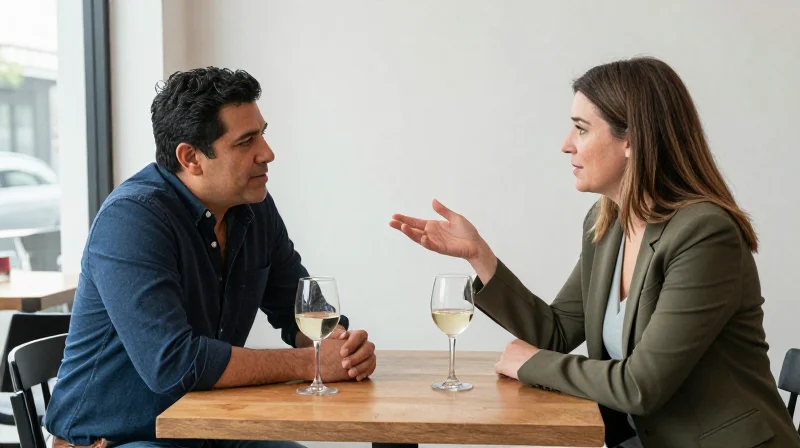
Apps are now the default mechanism for dating in your 50s whether or not you’d prefer to meet someone organically. Most people in this demographic would rather have met someone through friends, at an event, through some natural convergence. That preference doesn’t map onto reality anymore, and holding out for organic connection too firmly often means not meeting anyone.
The app experience in your 50s is genuinely harsh in ways that differ from what younger users describe. Profiles openly listing requirements for “a supermodel with no baggage.” Monosyllabic responses. Ghosting at 53 — which surprises people every time, even though it probably shouldn’t.
Fifteen-minute micro-dates. Men who show up 40 minutes late as a pattern rather than an accident. One person described spending less time on a date than she spent deciding what to wear to it.
At the same time: there are accounts of interesting, engaged, genuinely available people found through apps in this demographic. The honest position isn’t that apps work or don’t — it’s that the path is inconsistent, the ratio of useful to useless interactions is low, and strategy has to account for your specific situation rather than a universal playbook. App optimization doesn’t fix the underlying market. But it affects which part of the market you see.
One practical note from the best dating apps for over 50: profile authenticity matters more at this age than at younger ones. Using your real name, showing actual photos from actual life, writing something that sounds like a person rather than a resume — these things filter for better matches faster, even if they reduce overall volume.
The Honest Conversation About Safety — Financial and Physical
Two safety topics that most articles skip or treat as afterthoughts:
STI risk is a documented and rising public health issue in adults over 50. People in this cohort came of age before sexual health education normalized testing as a standard part of intimacy — their formative experience of sexual health was largely shaped by pregnancy prevention, not STI prevention. That left a generational gap: many people in their 50s never developed the habit of initiating testing conversations, and tend to assume the risk belongs primarily to younger people. It doesn’t.
Rates of STIs in adults over 50 have risen significantly over the past two decades, and age or perceived respectability signals nothing about status. Having a direct conversation about testing before becoming physically intimate is as relevant at 53 as at 23. It’s worth saying plainly here, because almost no mainstream dating content does: get tested, ask your partners about testing, and treat it as a standard part of physical intimacy rather than an expression of distrust.
Financial safety has two distinct layers. The first is romance fraud — sweetheart scams — which targets this age group heavily. Annual federal data on romance fraud losses shows numbers that are significant and rising. The profile of a targeted person isn’t gullibility; it’s loneliness plus a sudden intense connection with someone who accelerates intimacy and financial discussion simultaneously.
The harder conversation is genuine financial compatibility, and it has several dimensions:
- Retirement assets and how each person plans to use them.
- Adult children who expect to inherit, and what that means for joint financial decisions.
- Debt from divorces or past financial setbacks that compounds in ways that don’t bend easily after a certain point.
- Financial patterns baked in over decades — spending habits, risk tolerance, attitudes toward money — that feel flexible in the early flush of connection and reveal themselves as fixed much later.
“Moving too fast regarding finances” isn’t only about scam risk. It’s about discovering fundamental incompatibility in an area that doesn’t compromise well at this stage of life.
Neither conversation is romantic. Both are necessary.
What Actually Works: Patterns from People Who Found Someone
The people who found partners in their 50s don’t share a technique. They share a posture. Directness over strategy. Specific self-knowledge over general optimism. Flexibility about preferences, firmness about deal-breakers.
One man abandoned a dating app after a week — not finding it useful, not meeting the right people. Months later, a woman who’d seen his profile searched for him by real name on Facebook and reached out. They’re together. The lesson isn’t “use your real name so women can stalk you later” — it’s that authenticity creates findability, and the path doesn’t always look like what you planned.
The dating after 40 shift in self-knowledge compounds through your 50s. The people who found someone describe knowing what they needed with unusual precision — not “someone kind” but the specific kind of kindness they could actually live with. Not “chemistry” but the specific way they needed to feel seen.
That specificity isn’t pickiness. It’s what makes a match actually work.
Some practical advice for dating in your 50s worth paying attention to:
- Convert online conversation to in-person quickly. In your 50s, chemistry that only exists in messages is particularly easy to sustain — you have more imaginative material to project onto someone, and fewer first-date opportunities remaining. Real-life availability is the harder-to-fake variable, and you need to see it early.
- Let go of preferences that are about aesthetics, not compatibility. Hold firm on deal-breakers that have a track record of mattering. These are different categories, and conflating them costs you.
- If you’ve been at this a while without success, look at the pattern of who you’re choosing, not the pattern of who’s choosing you.
Five years in and not a single fight is how one person described her relationship that followed decades of poor choices and difficult relationships. She’s not an outlier. She’s someone who finally knew what she needed and stopped accepting less.
Frequently asked questions
What is the 3 3 3 rule in dating?
The 3-3-3 rule — waiting 3 days to text, going on 3 dates before deciding, spending 3 months before becoming exclusive — is a loose framework from younger-cohort dating culture. At 50, it maps poorly. Time is scarcer, you know faster what you’re looking for, and pacing games are counterproductive when directness is actually available to you.
What is the 7 7 7 rule for dating?
The 7-7-7 rule — seven dates before sex, seven months before exclusivity, seven years before marriage — is a structured pacing framework some people use to slow down decisions at each stage. At 50, it has the same problem as the 3-3-3 rule: it imposes an artificial timeline when self-knowledge should be doing that work, and people in their 50s generally know within a few dates whether something has real potential. Building in mandatory waiting periods doesn’t deepen connection — it just delays the direct conversation you could be having instead.
What is a red flag when dating in your 50s?
The most consistently reported red flags in this cohort are emotional unavailability framed as “not ready to settle down” after intense initial connection, moving too fast around finances or future plans, and the inverse — someone who has detailed future-planning conversations early but becomes evasive when actual commitment approaches. Someone who can’t be specific about what they want after a reasonable amount of time is telling you something.
What do men in their 50s want in a woman?
The honest answer from people actually in this dating pool is split: some men report genuinely seeking a committed partner and showing up that way consistently, while a significant portion want company and physical connection without settling down, and are sometimes seeking partners considerably younger or thinner than their own circumstances would suggest as realistic. Both types exist. Figuring out which one you’re dealing with early is more useful than hoping the second type will change.
Is dating in your 50s worth it?
The published record says yes, overwhelmingly — because people who gave up don’t write articles, and the silent majority who tried and stopped don’t show up in success story content. That doesn’t make the yes answers wrong, but the sample is skewed, and if you’re genuinely deciding whether to try again after difficult experiences, acknowledging that it’s harder than the cheerful summary suggests isn’t pessimism. Whether it’s worth it depends on what you’re actually looking for — which is the only question that matters.