
The most useful dating advice for men isn’t about what to say or how to act — it’s about selecting the right person and walking away from the wrong one before you’re in too deep. Most men who struggle with dating aren’t failing at attraction; they’re investing in the wrong people and ignoring signals that were visible from day one.
It’s not just you — dating is structurally hard. But the honest dating advice for guys that actually works doesn’t come from pickup forums or confidence coaches. It comes from learning to read situations clearly and act on what you see. Meanwhile, the men who figured it out quietly stopped chasing tactics and started making better decisions earlier.
TL;DR
- The real problem isn’t your opener — it’s who you’re pursuing and how fast you commit.
- Early red flags don’t soften with time; they become the reason it ends.
- You don’t need more confidence. You need better criteria.
Why Most Dating Advice for Men Solves the Wrong Problem
Most dating advice for guys runs on tactics. Better openers. More confident body language. Profile photos that show your jawline.
The men who actually talk to each other about dating are having a completely different conversation.
When men compare notes on what’s actually worked, the consistent theme isn’t technique — it’s communication: actually talking to each other instead of reading between the lines. The most resonant dating tips for men don’t mention confidence drills, openers, or body language at all. The advice industry and real men are not discussing the same problem.
What that gap reveals is this: most dating content is built for men who think the obstacle is attracting women. The actual obstacle, for most men, is something quieter — choosing poorly, committing too fast, staying too long, and not knowing how to exit when the evidence was always there.
If you’re only interested in someone’s physical appearance, you’re going to hate them at some point when their personality doesn’t mesh and you can’t figure out why their looks stopped distracting you from the incompatibility. That’s not a confidence problem. That’s a selection problem.
Having a hot girlfriend doesn’t mean you’re winning. Having a hot girlfriend who treats you great and improves your life does. No one in the tactics industry is saying that.
Build Your Life First — Then Date From Fullness
There’s a framing that shows up in how men describe dating well: build the nest first, then call the birds. What it means practically is that you’re not dating from emptiness — you’re dating from a life that’s already functioning. Most people’s lives are works in progress, but the question is dating because you genuinely want to share something, or because you’re hoping someone else will fill a space that feels uncomfortable to sit with alone.
When the answer is the latter, it shows up in small ways: texting someone back faster than you want to, agreeing to plans you’d rather skip, tolerating early behavior you’d ordinarily exit — because the alternative feels worse than the relationship. That’s the signal, and it’s worth knowing before you start.
Some markers that you’re on the right side of that line:
- You can spend a weekend alone without it feeling like a problem that needs solving.
- Your finances are stable enough that you’re not stressed about the cost of dating.
- Your emotional baseline doesn’t require constant input from other people to stay level.
- You’re clear on what you actually want — not what you think you’re supposed to want.
When your life is full before you start, rejection becomes math instead of identity. A no is information about fit, not a verdict on your worth. That shift changes everything about how you show up.
Who You Pursue Matters More Than How You Pursue Them
The selection question is where most dating with intention rather than momentum becomes concrete. You’ll find pages of content on how to message someone, how to plan a first date, how to escalate. Almost nothing on whether this particular person is worth your continued investment.
The men who date well aren’t chasing the most attractive option. They’re narrowing toward genuine compatibility, and they’re doing it early, before emotional investment makes clear thinking harder. The practical version:
- Cast wide early — meet a lot of people without serious investment.
- Apply actual judgment before escalating — does this person have the qualities you need, not just the ones that look good on paper?
- Pivot quickly when serious problems surface — early problems compound, they don’t resolve.
Here’s what step two looks like when it goes wrong. A man meets someone on an app. She’s exactly his type physically. On date two, he notices she’s dismissive toward the waiter — pleasant to anyone who could do something for her, cold to anyone who couldn’t.
He tells himself it’s not a big deal. She was probably tired. Eight months later he’s trying to explain to his friends why he resents someone he was excited about. The signal was there on date two.
He cast it as irrelevant because he’d already started committing based on attraction, and attraction had already started doing his reasoning for him. The selection decision was made before he made it consciously.
Treating early dating as information-gathering means you’re not trying to convince someone to like you. You’re trying to figure out whether this person fits your actual life.
What You Notice First Is What Ends It — Red Flags Don’t Resolve Themselves
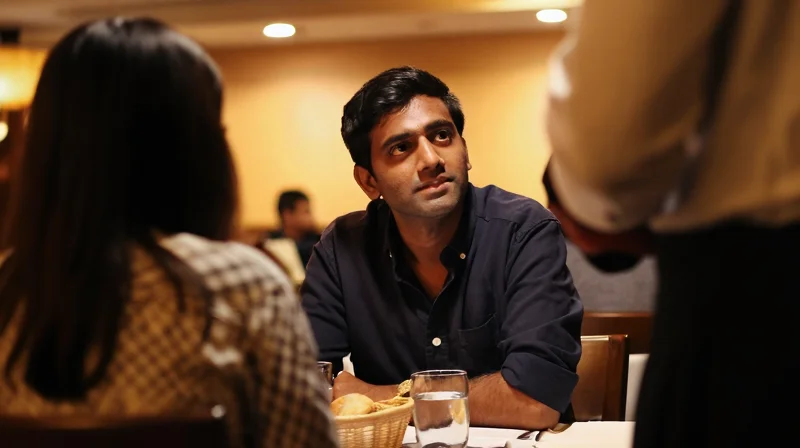
The signal was there on date two. You just talked yourself out of it.
The red flags are usually visible from the start. Men don’t miss them because they’re naive. They miss them because they’re socialized to fix things, give people the benefit of the doubt, and treat patience as a virtue. In a functioning relationship, those are genuine strengths.
In the wrong relationship, those strengths become the mechanism by which you stay six months past the point where the evidence was already clear. The man who’s “too patient” isn’t weak — he’s applying a strength in the wrong context. The relationship doesn’t reward patience; it just converts it into delay. And the red flag you named and rationalized away in week three becomes the same argument you’re having in year two, usually in exactly the same form.
What to do with early red flags isn’t complicated. The difficulty is emotional, not strategic:
- Name what you’re seeing clearly. Not “she seems a little intense sometimes” but “she got angry when I made plans without checking with her first.”
- Ask yourself whether you’ve already had the conversation about this problem. If you have and nothing changed, that is your data.
- If you’re staying because you’re hoping it will change rather than because you’re confident it already is, exit now. Not after another month. Now.
You’re not bad at dating. You’re probably just too patient with the wrong people.
Being Direct Is Not a Trick — It’s Just Rare Enough to Work

There’s a story I keep thinking about. A woman texts a man she went on a date with: “thank you for not yelling at me.” He’d been calm and honest when she rescheduled. That’s it.
That was the bar she was working with.
He didn’t do anything impressive. He was just direct and non-reactive in a situation where apparently other men had been unpleasant. This is the lowest achievable form of competitive differentiation in dating, and it costs nothing.
Direct communication in practice means:
- Asking someone out clearly, without hedging. “Do you want to get dinner this week?” not “We should hang out sometime.”
- Stating your intentions without ambiguity when someone asks or when it becomes relevant.
- Saying what you mean when something isn’t working, instead of hoping they’ll figure it out.
Anything other than a clear yes means no. Don’t spend energy reading ambiguity. Ambiguity is information — it tells you this person isn’t sure, and that’s useful to know early.
For what direct communication actually looks like in practice, the standard is lower than you think and the returns are higher. You’re not performing directness — you’re just saying what’s true. That’s rare enough to work.
How to Stay Sane When Rejection Is Built Into the Process
Online dating rejection rates above 90% are not personal failure. They’re math. If you’re getting matches and dates, you’re playing a volume game where most outcomes are no, and that’s structural — not a signal about you specifically.
The psychological cost of volume rejection is real and worth taking seriously. The answer is to build your life so rejection doesn’t hollow you out. When your social world, work, interests, and wellbeing don’t depend on whether this person texts back, a no lands differently. It’s a redirect, not a collapse.
Some specific signals it’s time to step back:
- When every match feels like a job interview you didn’t prepare for, and you’re reading profiles looking for reasons to disqualify rather than reasons to reach out — that’s not pickiness, that’s burnout. Take a break before dating apps stop feeling worth it, not after.
- When people you meet through shared contexts consistently feel less distorted than app matches, that’s not coincidence. You’ve already seen them behave in a space where there’s nothing to perform — no profile to optimize, no first-impression pressure. That’s useful information about both of you, and it filters earlier.
- When you notice you’re going through the motions — swiping, messaging, dating — without actually wanting to meet anyone, the calculus has gone wrong somewhere and no amount of grinding through it will fix it.
Rejection reads differently when it comes from a full life. From an empty one, it feels like confirmation of something.
Frequently asked questions
What is the 3-3-3 rule for dating?
The 3-3-3 rule suggests three dates in the first three weeks, each lasting about three hours — a structured pace designed to build connection without over-investing early. It’s a rough guideline, not a formula, but the logic behind it is sound: give a connection enough time to develop before making decisions, without letting early infatuation drive the timeline.
What is the 7-7-7 rule for dating?
The 7-7-7 rule proposes waiting seven dates before making major decisions about a relationship, giving both people enough time to show their real behavior past the honeymoon phase. The first few dates are often performance — by the seventh, patterns start to emerge that are harder to fake.
What is the 6-6-6 rule in dating?
The 6-6-6 rule is an informal compatibility self-test: would you be comfortable introducing this person after six weeks, in six different social contexts, to six important people in your life? If any of those scenarios creates hesitation, that hesitation is worth examining.
What is the 3-6-9 rule in dating?
The 3-6-9 rule marks relationship checkpoints — three months to assess basic compatibility, six months to evaluate real patterns, nine months to decide about long-term potential. It pushes against the tendency to make permanent decisions in the first few weeks, when everything is still shaped by novelty.
Should men always make the first move?
Culturally, men are expected to initiate — and dating advice for women on this question is equally mixed, with no fixed rule that serves everyone. The more useful question is why you’re initiating. If it’s because you’re genuinely interested, that’s a good reason. If it’s because you’re afraid to be alone and this person is available, that’s a different situation that no amount of smooth initiation will fix.