
The most honest dating advice is simpler than the industry wants you to believe: stop outsourcing your self-worth to whoever you’re currently chasing, and stop confusing optimization with the actual problem. Most people aren’t bad at dating — they’re caught in a loop of self-abandonment, and no amount of better openers or profile tweaks will fix that.
If you want to understand why dating feels exhausting and cyclical, our guide on why dating feels so hard is a useful place to start. The short version: the loop usually begins before you match with anyone.
TL;DR
- The single most important thing you can do before dating anyone is become genuinely content being alone — not as a checklist item, but as a lived reality.
- Over-pursuit is the most common dating mistake, and it’s a direct consequence of needing someone else to confirm your worth.
- High early chemistry is often a warning sign, not a green light — what lasts looks a lot more like a pleasant hike than a lightning strike.
Be Content Alone Before You Start Dating Anyone
The most honest piece of dating advice you’ll encounter isn’t a tip. It’s a warning: be completely content with being single before you start dating. Not because you need to be perfect, but because people who haven’t resolved their need for external validation don’t just struggle — they actively attract partners who exploit that vulnerability and repel the ones who don’t.
This isn’t the same as “get your life together first.” That framing implies a checklist, a destination you have to reach before you’re allowed to date.
What it actually means is simpler: find something in your life you’re not ashamed of and keep building it. It can be small. It just has to be real.
The reason this matters practically: neediness isn’t something you say. It’s an energy that shows up in every text, every anxious read receipt, every time you soften your actual opinion to keep someone interested.
People feel it. Healthy partners pull back from it. Exploitative ones lean into it.
Here’s what genuine contentment with being single gives you:
- A filter that works before the first date — you’re not so hungry for connection that you’ll accept a bad fit
- The ability to walk away from something that isn’t working, because you know you’ll be fine either way
- Less of the anxious early-stage behavior that kills attraction faster than almost anything else
The hard part isn’t understanding this — it’s acting on it before you feel ready. Most people wait for the right person to make their life feel worth living, rather than building something real first. But that “something” doesn’t have to be impressive. A half-finished novel. A skill you’re getting sharper at. A morning routine you actually keep.
The point is that you’re not in a holding pattern, waiting on someone else to press play. People are drawn to that — even in its smallest, most unfinished forms.
Stop Choosing What Isn’t Choosing You Back
You’re not bad at dating. You’re just abandoning yourself every time someone shows the slightest interest — even when their interest is tepid, inconsistent, or honestly absent. Over-pursuit is the most common and least-discussed dating mistake, and it’s a direct consequence of not having resolved the content-alone piece above.
A relationship is something you do with someone, not something you give to them or extract from them. If you’re doing most of the work — initiating, planning, following up, interpreting silences charitably — that’s not a relationship. That’s a one-person performance with an audience that hasn’t bought a ticket.
Here’s what over-pursuit actually looks like in practice: you send the first message three times running. When they respond with something short, you write something longer to compensate. They go quiet for two days and you tell yourself they’re probably just busy — then spend the next 48 hours checking your phone. You start softening your opinions in conversation because you don’t want to push them away.
None of this feels like pursuit from the inside. It feels like caring. But it’s a signal, and the people who would be good for you are reading it clearly.
The “you have fewer options than you think” insight is genuinely useful information, not a put-down. Apps create the illusion of infinite choice. In reality, your real-world pool of compatible, available, interested people is much smaller — and that’s actually freeing once you accept it. You stop treating every match like it has to work.
More practically: it gives you permission to walk away from a lukewarm situation faster. Not with grief. Just with the recognition that a maybe from someone ambivalent is worth less than a clear yes from someone who’s actually in.
If someone says “you’re too good for me,” believe them. That’s not false modesty. That’s information. Take it.
Learn more about recognizing red flags early before you’ve already built an attachment.
Chemistry Is Not the Signal You Think It Is
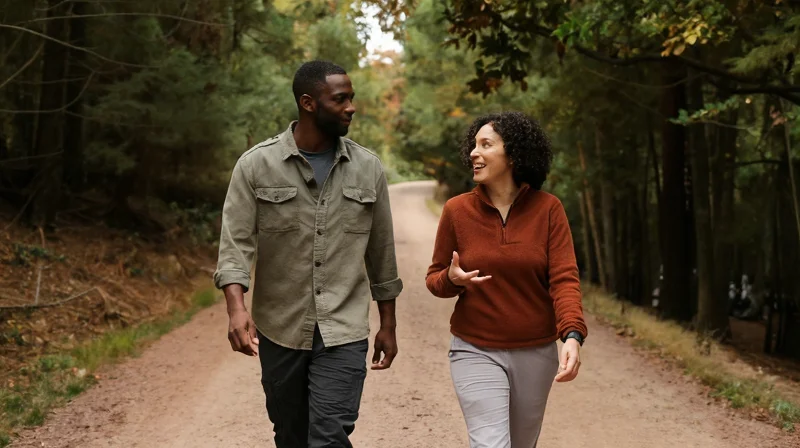
Boring is what you want. I know that’s not a satisfying thing to read — but if you’re looking for something that lasts, the dizzy, electric, can’t-stop-thinking-about-them feeling at the start is more often a warning sign than a green light.
High early chemistry tends to be infatuation, which is a neurochemical event, not a compatibility signal. Infatuation burns intensely and briefly. What it tells you is that you find someone attractive and that your nervous system is activated. What it doesn’t tell you is whether they share your values, whether they’re emotionally available, or whether the relationship will be functional once the activation fades.
Read our deeper breakdown of chemistry vs. compatibility if you’ve ever found yourself in a relationship that felt electric and somehow terrible at the same time.
What sustainable love actually looks like: there’s no mountain you’re moving to be with this person. It’s more like a challenging hike with good company — you’re working, but you’re not suffering. Shared values, lifestyle fit, mutual respect.
These are slower to develop and harder to romanticize. They also last.
The contrast is real and it’s specific. Two people who feel electric in month one and are in constant conflict by month three — different life goals, different financial habits, one wants kids and the other doesn’t, and the intensity they mistook for connection is now the intensity they bring to every argument. Two people who felt comfortable but not electric at the start, who kept showing up, and who two years later are still genuinely enjoying each other’s company.
The second couple doesn’t make for a good story. They also didn’t break up.
Ask yourself early:
- Do we actually want the same kind of life?
- Do I feel like myself around this person, or am I managing how I come across?
- Is the effort mutual — or am I doing most of it?
Rejection Is Information, Not a Verdict on You
Everyone knows rejection isn’t personal. Nobody feels it that way. That gap — between understanding something intellectually and having it land emotionally — is where most dating advice falls flat.
What makes rejection worse isn’t the rejection itself. It’s the behavioral spiral that follows: arguing back, re-explaining yourself, pursuing harder after a no, or reframing their disinterest as a challenge to overcome. None of that changes the outcome. All of it compounds the damage to your self-esteem.
Rejection is compatibility information arriving early, which is actually the best possible time to receive it. Someone who isn’t feeling it with you isn’t a failure on your part — they’re a person telling you the truth, which is the most useful thing they can do. The alternative is finding out six months in.
What to do with the gap between knowing it isn’t personal and feeling it that way: let it land. Sit with it for a day. You don’t have to talk yourself out of being disappointed — disappointment is appropriate.
What you’re watching for is the second move. The urge to text again, to explain yourself better, to reframe their no as uncertainty. That urge is where the damage happens. Feel the rejection.
Then don’t let it write the next chapter. What you learn from a pattern of rejections — not from any single event — is what’s actually worth paying attention to.
Don’t fight someone’s no. Don’t ask for a second explanation. Setting healthy limits on what you’ll accept — and what you won’t revisit — is covered well in our guide on setting healthy boundaries in relationships.
Use Your Phone to Set Dates, Not to Build a Relationship

The relationship only exists in person. Everything else is logistics.
Weeks of texting creates a sense of knowing someone that isn’t real. You’ve built a version of them from their best-edited messages, their most considered responses, the absence of all the context you’d have in a room together. That’s not a connection. That’s a projection you’ve developed feelings for.
Mobile is a logistics tool:
- Use it to confirm the date, give an address, and say you’re running five minutes late.
- Use it as a secondary check-in once you’re actually dating.
- Don’t use it to actually know someone — you can’t.
Gen Z is souring on dating apps at an accelerating rate — and most online dating advice misses the point: the apps work for matching, not for building anything real.
Ghosting and breadcrumbing — behaviors that exist almost exclusively in text-based pseudo-relationships — cause real psychological harm to the people on the receiving end. They emerge from a specific dynamic: when contact is purely text-based, there’s no real-time feedback, no body language, no accountability that comes from being in the same room as someone. Disappearing is easy. The harm to the recipient isn’t just hurt feelings — it’s the cognitive loop of trying to make sense of ambiguous silence, which generates anxiety and self-doubt in ways that a direct conversation, even a painful one, would not.
The more someone substitutes texting for actual time together, the more these dynamics take hold. Learn more about dating app burnout if this pattern sounds familiar.
Meet faster. Invest less in the text thread. Let the real thing be the real thing.
Frequently asked questions
What is the 3-3-3 rule for dating?
The 3-3-3 rule suggests meeting three times in three weeks across three different settings before you make a real assessment of someone. It’s a structure designed to force in-person contact over text-based pseudo-connection — and to give you enough varied context (different settings, different days, different moods) to get a realistic read before you’ve fully invested.
What is the 7-7-7 rule for dating?
The 7-7-7 rule is a pacing framework: seven dates before becoming exclusive, seven months before moving in together, seven years before marriage. The logic is to slow infatuation-driven decisions by putting a structured timeline between the feeling and the commitment. Whether you follow the specific numbers matters less than the principle — don’t let early intensity make decisions your future self has to live with.
What are the 5 C’s of dating?
The 5 C’s are typically Chemistry, Compatibility, Communication, Commitment, and Character. This framework maps directly onto the article’s main thesis: chemistry is only one of five signals, and it’s probably the least reliable as a long-term predictor. Character (who someone actually is under pressure) and compatibility (whether your lives actually fit together) matter considerably more.
What is the 3-6-9 rule in dating?
The 3-6-9 rule is a milestone check-in framework: at three weeks, assess whether this person is consistent; at six weeks, whether they’re emotionally available; at nine weeks, actually aligned on where things are going. It’s designed to catch situationships early — before months of investment have made leaving feel costly — by giving you specific questions to ask at specific points rather than waiting for clarity that may never arrive on its own.