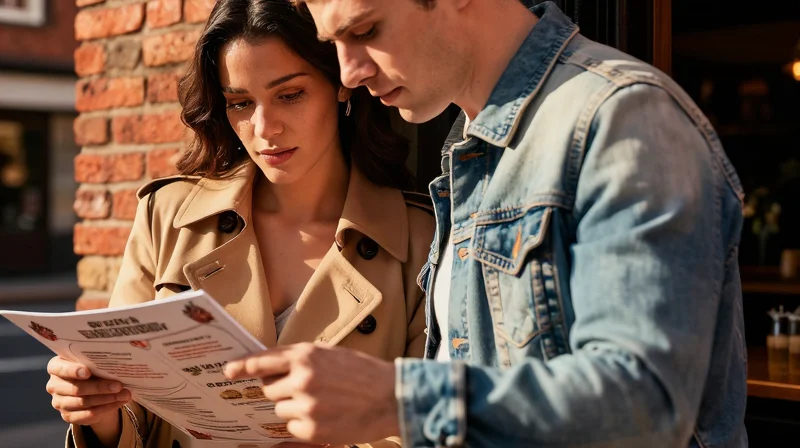
A double date is a social outing where two couples spend time together — and whether it works has almost nothing to do with where you go. The activity fills maybe 10% of the equation; relationship stage and the other couple’s chemistry fill the other 90%, and almost no one talks about that before telling you to go bowling.
TL;DR
- Double dates belong in established relationships, not early dating. Using one as a “first date” strategy dilutes romantic focus at the exact moment you need it most.
- The other couple’s dynamic sets the emotional temperature for the whole night; their tension, awkwardness, or energy becomes everyone’s problem within the first hour.
- If you’re going, choose something with built-in conversation: a game, a cooking class, a progressive dinner. A movie is four people sitting in the dark not talking.
What a Double Date Actually Is (and Why the Definition Matters)
The Merriam-Webster entry for “double date” traces the term to circa 1931, where it functions both as a noun (“they went on a double date”) and an intransitive verb (“they used to double-date on weekends”). That framing has lasted nearly a century — recent celebrity coverage still reached for the same word to describe a Venice outing with George and Amal Clooney and a New York evening with Bradley Cooper and Gigi Hadid. The definition is simple: a date shared by two couples.
But the word “couples” is doing less work than most people assume. A double date isn’t a milestone or a formal institution with rules attached. It’s just four people who happen to be romantically paired with someone else in the group, and whether it’s good depends entirely on whether those four people enjoy each other’s company.
That requirement (four people who genuinely mesh, at a stage where romance and sociability can coexist) is harder to engineer than most advice lets on. The activity is nearly irrelevant if you’ve got the right four people in the room. And if you don’t, no escape room booking fixes it.
Should You Double Date Right Now? How to Know Before You Go
This is the question almost no advice actually answers. Here’s a short framework before you commit to a reservation.
Go for it when:
- You’re an established couple introducing your partner to close friends who are also a couple
- All four people already know each other and want low-stakes shared time
- You want a relaxed alternative to your usual date night and romantic focus isn’t the priority
Hold off when:
- You’re still in early dating and actively trying to build romantic interest
- You’re considering it as a substitute for your actual first date
- You don’t know the other couple well enough to predict how they’ll show up
- You matched through Tinder’s Double Date feature: treat it as a first introduction with four strangers, not a casual night out, and apply the same early-dating cautions
Picture a specific situation: you’ve been on two dates with someone, things are going well, and a friend suggests making it a double next weekend. It sounds easier. Less pressure, more relaxed. But what you’re trying to do is build something with this person, and a double date moves that work offstage.
The whole point is getting to know each other as potential romantic partners. You don’t need your friends to sell you to her. You need time with her.
When attraction is still forming, a double date splits your attention and hers. It’s easy to hide behind group energy, which is exactly why it’s wrong for early dating. Yes, a group setting reduces awkward silences, but it also reduces the focused one-on-one attention that actually builds something.
For casual time with someone you’re already seeing, that trade works. For someone you’re genuinely pursuing, it doesn’t.
For people who already feel the pressure of group dynamics more acutely, our piece on social anxiety around group dates covers how that performance layer can raise rather than lower the stakes.
The Other Couple Is the Real Variable (Not the Activity)
The health of the other couple’s relationship is probably the biggest factor in your evening — and it’s the variable almost nobody factors in when planning. A couple going through something brings that energy into the room whether they intend to or not. Picture it: forty minutes into dinner, they’ve started answering each other in short sentences with a few too many pointed jokes. The whole table feels it.
It’s not your night anymore. It’s their night, and you’re just in it.
What to look for when deciding who to invite:
- People you’d enjoy spending time with even if one couple had to cancel
- A couple whose default dynamic is relaxed, not tense, not performative
- Similar energy levels; a high-energy couple paired with a low-key one rarely finds a rhythm
- Couples whose behavior, not just personality, you can actually predict
The warning signs are worth naming. A couple who’s been fighting, a pairing where one person clearly doesn’t want to be there, or two people with radically mismatched styles can derail the night quickly. Mismatched energy doesn’t average out over the course of an evening. It amplifies.
Double Date Ideas That Actually Work (Organized by Energy Level)
Every double date list covers the same ground: bowling, escape room, trivia night. The better question is what energy you’re actually after, and whether the activity creates conversation or just fills time.
Active and fun:
- Mini golf or bowling: built-in light competition, easy to laugh at
- A food-tour walk or neighborhood scavenger hunt; see outdoor versions for fresh-air formats
- A competitive cooking challenge at home: each couple makes the same dish from the same ingredient list, then everyone judges the other couple’s version. Genuine banter, and the stakes are low enough that losing is funny.
Cozy and creative:
- The appetizer–entrée–dessert game: each couple picks one course at a different restaurant, and all four move between three spots over the night. Built-in competitive structure, natural conversation throughout.
- A book or record store scavenger hunt where each person picks something to surprise someone else in the group, then compare choices over drinks: cheap, revealing, and more interesting than a board game
- Pottery class, painting night, or any structured creative format that gives you something to comment on while you work
Relaxed and social:
- A collaborative dinner at home where each couple handles a different course
- A blind cocktail or wine tasting with a judging component
- Game night built around team-mixing formats (Codenames, Wavelength) that break the two-couple dynamic into new pairings
Double Date Etiquette: The Parts Nobody Actually Explains
Three real friction points come up consistently: PDA calibration, budget misalignment, and inside joke exclusion. The first and third are easy to name and hard to self-monitor. The second one gets almost no attention despite being the most likely to cause a genuinely uncomfortable evening.
PDA calibration is difficult to gauge mid-evening. A workable shortcut: if you wouldn’t do it in front of a colleague you respect, dial it back around a couple you don’t know well. With close friends whose comfort level you already know, your default is probably already calibrated.
Budget misalignment causes more friction than any other double date variable. When one couple wants steakhouse and the other is watching expenses, someone either subsidizes or everyone feels uncomfortable. Name a price range before you commit to a venue. Say it once upfront: “I’m thinking somewhere in the $25–35 per person range.”
That’s the entire fix. For the logistics side of planning the night, having one person take the lead avoids the indecision loop that wastes the hour before you leave.
Inside jokes and exclusion follow the same pattern. A long-established couple naturally falls into shorthand the other couple doesn’t share. Once or twice is fine.
When it becomes the default mode, the other couple starts feeling like spectators at someone else’s relationship. Active redirection toward shared topics is the fix.
Frequently asked questions
What does double date mean?
A double date is a social outing shared by two couples. The term dates to circa 1931 and works both as a noun and an intransitive verb. It differs from a general group hangout only in that all four participants are romantically paired with someone else present.
Is it a good idea to double date?
A double date works well when both couples are established and all four people genuinely enjoy each other’s company. For early-stage dating (especially a first date), a one-on-one setting builds romantic connection more effectively because it keeps focus intact rather than diffusing it across a group. The variable most advice ignores is the other couple’s relationship health: a couple going through tension brings that into the evening whether they intend to or not.
How old are Cadel and Mia in real life?
Cadel and Mia, the couple behind the YouTube channel Double Date, are in their mid-to-late twenties as of 2026. The channel documents their relationship alongside co-creators Jasmin and James; their exact birth dates haven’t been publicly confirmed, but their content timeline and stated life milestones support the estimate. Their TikTok account under @doubbledate has accumulated over 3.2 million likes and 201,500 followers.
What happened to the channel double date?
The YouTube channel Double Date remains active as of 2026 with over 27,000 subscribers, posting travel vlogs and couples content featuring Cadel, Mia, Jasmin, and James. Recent uploads include travel content from Zurich and competitive “Boys vs Girls” videos, suggesting the channel shifted toward challenge and travel formats after its initial growth. Their TikTok presence under @doubbledate is significantly larger than their YouTube following.