
A first date is not a performance — it’s an information problem, and the sooner you treat it that way, the better your decisions will be. You’re there to find out whether you want to see this person again, not to convince them you’re worth seeing again.
Most people leave a first date more confused than when they arrived. That’s not because first dates are mysterious — it’s because they walked in with the wrong goal. The performance mindset turns you into an actor trying to impress a reviewer. The information mindset turns you into someone with an actual question to answer.
One of those leaves you with data. The other leaves you with anxiety.
TL;DR
- The goal is a clear answer, not likability — you’re gathering information, not auditioning.
- Short beats long: drinks or a walk with a natural end point outperforms dinner every time.
- The mediocre date is the hardest call, and “I don’t know” is already an answer.
What a First Date Is Actually For
The best description of a first date I’ve heard: it’s a vibe check. Not a compatibility quiz, not an audition, not a negotiation. A vibe check — are you glad this person exists when you’re actually in the room with them?
Here’s what that means in practice. You’re not there to confirm the facts of their life. You’re there to notice how you feel when you’re with them:
- Whether the conversation has a rhythm or feels like work
- curious about them or just being polite
Facts are the least interesting thing about a person on a first date — how you feel talking to them is the whole thing.
What most first date advice misses is that first dates are often asymmetric. One person has already made a call in the first 10 minutes. One person is screening harder than the other.
One person already likes the other more. Pretending the date is a perfectly mutual exploration is pleasant but false — and it leads people to ignore information they already have.
Most women go on first dates primarily to have fun, not to assess romantic potential. That’s not evidence that evaluation doesn’t happen — it’s evidence that the evaluation works better when you stop forcing it. When you stop trying to make a decision and just pay attention, the decision tends to make itself.
How to Structure a First Date That Actually Works
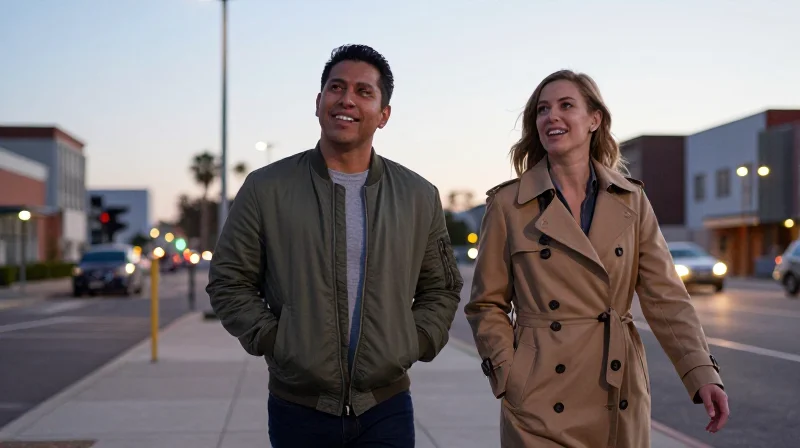
Short beats long, every time. Drinks or a walk with a natural end point outperforms dinner at a table where you’re stuck with each other for two hours. This isn’t about low commitment — it’s about structure. When there’s an implicit time limit, both people are sharper.
The conversation moves faster. The exit doesn’t need to be negotiated.
The “let’s get drinks at 8pm” format works for a specific reason: it makes the scope obvious. You’re not committing to an evening; you’re committing to a drink. If it’s great, you can get another one. If it’s not, you both already know it ends when the glass is empty.
For first date tips on what actually works by life stage, our first date ideas guide covers formats that don’t feel forced.
On activity-based dates — bowling, cooking classes, barcades — the honest answer is that these work better as second or third dates than firsts. They reduce the pressure to talk, which sounds good until you realize that the conversation is most of what you’re there to evaluate. Side-by-side formats (walks, bars) tend to produce better conversation than face-to-face ones — there’s less performance pressure when you’re not staring directly at each other.
The age dimension matters more than most guides acknowledge. A bowling alley works when you’re 22 and the bar for a first date is low. At 34, it reads as someone who didn’t think about what they were doing — or who’s still doing first dates the way they did in college. The format signals something about how seriously you’re taking this, and a high-effort activity first date creates a register mismatch before anyone’s said a word.
“Low-stakes and reversible” looks different at different points in your life. Coffee at 28 is fine. At 38, drinks at a bar you actually like reads as intentional rather than cheap — you picked it, you like it, you’re bringing someone into your life instead of defaulting to the nearest Starbucks. The format communicates something whether you intend it to or not.
Reading the Signals When You’re Also Managing Nerves
Here’s what “trust your gut” advice leaves out: your gut on a first date is shaped by anxiety, not just instinct. You’re trying to read someone else’s interest while managing your own social stress at the same time. Those are two completely different tasks, and doing them simultaneously is genuinely hard.
The most useful reframe I’ve found: pay attention to whether you feel like yourself. Not whether you feel sparks — whether you feel like a normal human being having a conversation, or whether you feel like you’re performing. Ease is signal. Exhaustion is also signal.
The person who makes you feel relaxed is different from the person who makes you feel like you have to be “on.”
The gap between someone’s texts and the actual person sitting across from you is real, and it goes both ways. I’ve gone on dates I was dreading that turned out to be easy and fun. I’ve also had the reverse — someone who was electric over text who turned out to be exhausting in person. Neither outcome is a failure; both are information.
Our piece on dating anxiety goes deeper into separating the signal from the noise when nerves are running high.
What to actually pay attention to:
- Do you find yourself curious about what they’ll say next? That’s a good sign.
- Are you watching the clock, or have you lost track of time?
- Does the conversation have a natural rhythm, or does someone keep working to keep it alive?
- Do you feel like yourself, or are you slightly performing a version of yourself?
For more on reading interest signals beyond what someone says directly, our body language guide covers what to actually look for. These aren’t definitive metrics — they’re data points. But they’re better than “did I feel butterflies,” which is as much a function of anxiety as attraction.
The Mediocre Date Problem: What to Do When You Don’t Know
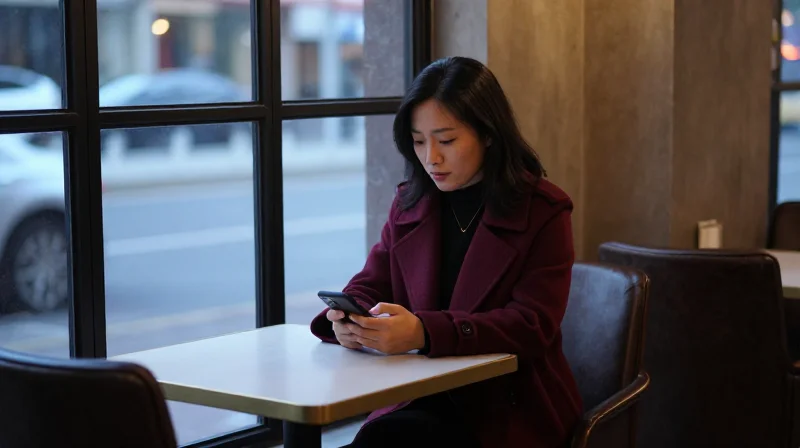
This is the part no one writes about. Great dates are easy — you want to see them again, done. Terrible dates are easy — you don’t, done. The “fine, I guess?” date is where most people stall, and stalling is its own decision.
Here’s the number that matters: one woman who tracked 76 first dates over three and a half years found that fewer than half — 35 — led to a second date. That’s not cynicism — that’s just what the math looks like when you’re actually using the date to make a call instead of defaulting to whatever feels polite. Most first dates don’t go anywhere, and that’s the expected outcome, not a failure.
When you leave a date not knowing, ask yourself one specific question: was there anything — one thing — that made you want to see this person again? Not “were there red flags?” Not “was it fun enough?” Was there anything that made you want more?
If the answer is yes, a second date makes sense. If the answer is “I don’t know,” that’s worth sitting with — because “I don’t know” usually means the spark wasn’t immediate, which doesn’t rule out a second date, but it should raise the bar for why you’d go. Going back out of inertia, or because it wasn’t bad, or because you don’t want to be mean — those aren’t good enough reasons. The second date won’t answer a question the first date left completely blank.
Picture this: you had a perfectly pleasant two hours with someone you have nothing against. They were nice. The conversation was fine. You laughed at a couple of things.
You’re home now and you’re not thinking about them. That absence of a feeling is already your answer.
Ask yourself:
- Was there a specific moment I wanted to keep going?
- Am I thinking about going again because I’m curious, or because I feel obligated?
- What specifically would a second date tell me that the first one didn’t?
If you can’t answer question 3, you already have your answer.
How to End a First Date Cleanly in Either Direction
The exit is one of the most under-coached parts of dating, and it matters more than most guides admit. If you want to see someone again, either make a plan before you leave, or specify exactly when you’ll reach out. “We should do this again sometime” is not a plan. It’s a soft close that leaves everyone uncertain.
If the date is going well and you want to extend it, you don’t need to engineer it. Just say “I’m not ready to leave — do you want to get one more?” That’s not desperate, it’s direct. Second date ideas are worth having ready so you can make the invitation concrete before you part.
But there’s a harder version of this problem that nobody talks about: the 60-minute dead zone. You’re 45 minutes in. The date is okay. They’re a perfectly decent person and you have nothing against them.
You’re not having a bad time, exactly — but you’re also not excited, and the idea of another hour starts to feel like false advertising. You’re not ready to commit to another drink, but staying doesn’t feel right either.
This is where most people default to staying too long out of politeness. Don’t. You’re not required to wait until the date is definitively terrible to close it. “I have an early morning” is honest and it’s enough — you don’t owe a more detailed explanation.
A clean exit at 60 minutes is kinder than 90 minutes of diminishing returns, and it gives both people a graceful out without either of you having to drag something to the finish line.
If the date isn’t going well for other reasons, the same logic applies. You’re not obligated to stay to spare their feelings. Leaving after a reasonable amount of time is fair.
The post-date limbo is its own problem. If you’re waiting for them to reach out first, consider that they may be doing the same thing. Reaching out first isn’t a signal of desperation — it’s a signal of interest, which is what you’re both actually trying to figure out. If you want to see them again, say so.
If you don’t, a short and honest message beats silence every time. “I had a nice time, but I didn’t feel a romantic connection” is kinder than disappearing.
Frequently asked questions
What is appropriate for a first date?
Something short, low-stakes, and reversible — drinks, coffee, or a walk — so neither person is trapped if it goes badly, and either person can extend it if it’s going well. Avoid formats that lock you in for hours before you’ve established whether you want to spend that much time with someone.
What is the 3-3-3 rule for dating?
The 3-3-3 rule — typically three days to reach out after matching, three hours for a first date, three days to follow up afterward — is a loose heuristic with no strong evidence behind it. It can be a useful default if you’re paralyzed by indecision, but treat it as a rough guide, not a formula. The actual timing matters less than the clarity of your signal when you do reach out.
What should I talk about on a first date?
Skip the question list — the slow-dig approach works better: share a little about yourself, then invite them to share something in return. The conversation deepens naturally instead of feeling like an interview. Our guide on first date conversation topics covers this in more depth, including what to avoid and how to handle the inevitable awkward pause.
What should I do when a first date is just… okay?
Decide before you leave — don’t let it default into a second date by inertia. Ask yourself whether there was a specific reason you’d want to see them again; if the answer is only “it wasn’t bad,” the second date is unlikely to change the read. A mediocre date isn’t a reason to keep going; it’s information about what wasn’t there.