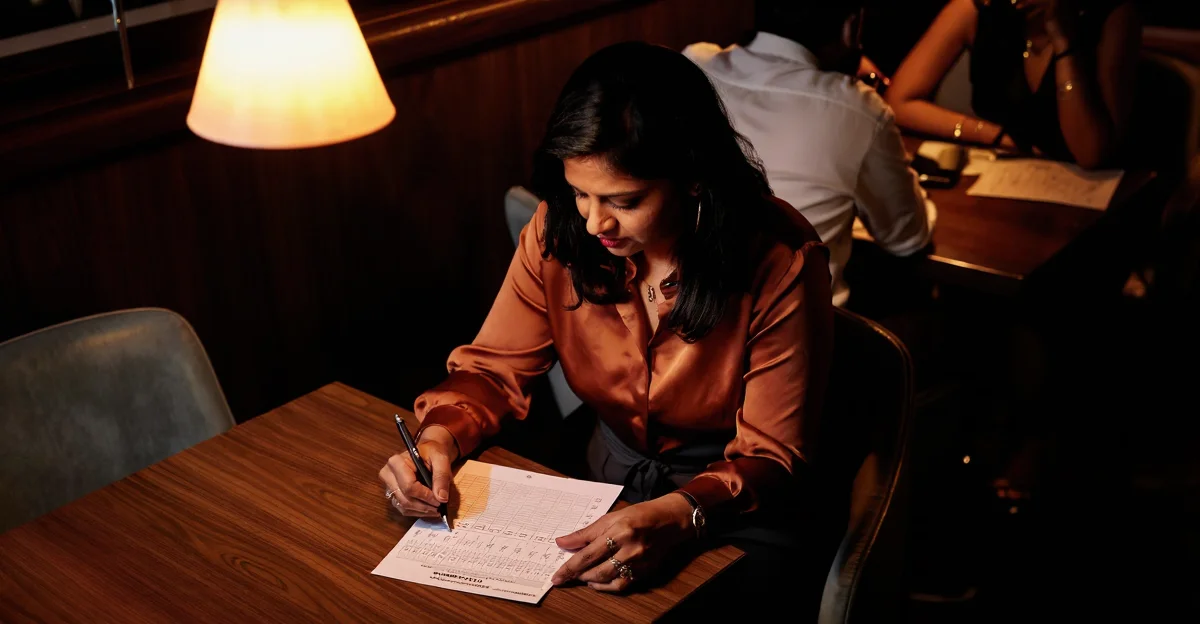
Speed dating is a structured singles event where you spend 3–10 minutes with each potential match, then submit a scorecard — and if both of you indicated interest, the organizer shares contact details within 24–48 hours. What the organizers won’t tell you is that the format doesn’t reduce rejection; it quantifies it, and the matching system only works when both parties follow through — which they often don’t.
If you’re coming from dating app burnout, speed dating probably sounds like a relief. In-person singles events have grown significantly in recent years, and the appeal makes sense: real faces, real conversations, no ghosting after a week of texting. But there are things about how the format actually works that nobody explains before you hand over your credit card.
TL;DR
- You’ll meet 5–14 people in one evening and average 2–3 matches — but only if both parties actually submit their scorecards, which is not guaranteed.
- A substantial portion of participants make their decision within 30 seconds, meaning “chemistry” is mostly an appearance assessment, not a conversational one.
- The “low pressure” framing is marketing spin: speed dating is the only dating format where rejection is systematized, timestamped, and impossible to rationalize away.
How Speed Dating Actually Works (The Version Organizers Skip)
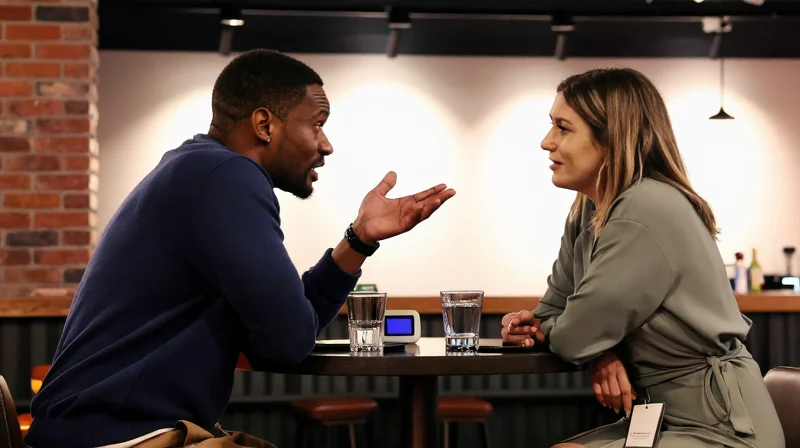
You register in advance, show up to a venue (usually a bar or lounge), get a nametag and a numbered scorecard, and rotate through a series of timed conversations — typically 5–14 of them depending on how many people attend. A bell or signal marks the end of each round. Men conventionally rotate; women stay seated. At the end of the night, you mark “yes” or “no” next to each number on your scorecard and hand it in.
The organizer collects the cards and processes them — usually within 24–48 hours — then contacts both parties when there’s a mutual “yes” and shares contact information. Contact is never exchanged at the event itself. This is deliberate, not an oversight: it removes the awkward real-time rejection dynamic that makes in-person cold approaches so uncomfortable for everyone involved.
Here’s what the FAQ pages don’t lead with: the system only functions if both participants submit their scorecards. Submission rates are not 100%. There are cases where every man submitted and zero women logged their results — and the system reports this as “no matches,” with no way to distinguish “she didn’t choose you” from “she never entered her choices.”
What you actually learn from an event depends almost entirely on whether the organizer discloses one-sided results. Some organizers will tell you who selected you even without a mutual match. That distinction matters more than it sounds: you can tell the difference between “nobody liked me” and “nobody submitted,” and you can see whether you selected someone who selected you back versus someone who didn’t.
Most organizers only report mutual choices, which collapses three very different outcomes into one useless result: zero. Before you register, finding out the organizer’s disclosure policy is the most useful research you can do — it determines what information you’ll actually walk away with.
The optimal conversation length is around 6 minutes — 3 minutes felt too rushed for a real exchange to develop, 8 too slow. What that tells you about what you’re actually being evaluated on: in 6 minutes, you’re not being assessed on your resume or your backstory. You’re being assessed on energy, attentiveness, and whether the rhythm of the conversation feels easy or effortful. Whether the exchange flows without forcing it is itself the signal.
What Science Actually Says About That “Instant Chemistry”
The selling point of speed dating is that you’ll “just know” when there’s chemistry in person — something no app can replicate. The reality complicates this more than it confirms it.
A substantial portion of participants make their assessment within the first 30 seconds of meeting. In that window, the primary available information is appearance. Conversation quality, wit, shared interests — those take more than 30 seconds to register. What people call “instant chemistry” is often a rapid appearance assessment dressed up in experiential language.
When women rotate instead of men, the selectivity gap between men and women nearly disappears. Women aren’t inherently more choosy than men; the structural default of “men rotate” creates the appearance of asymmetry. If you’re a man who walked away with fewer matches than expected, that’s worth understanding before you attribute it entirely to personal appeal.
There’s also a body language dimension that most advice for speed dating skips entirely. Pairs who naturally mirror each other’s subtle physical rhythms show stronger connection — not sustained eye contact or a firm handshake, but unconscious physical attunement. What this means practically is that all the advice about what to say in those 6 minutes is less predictive of mutual interest than whether you and the other person naturally fall into physical sync. You either match each other’s rhythm or you don’t, and you can’t manufacture it deliberately.
That’s actually useful to know: if you walked away with no matches after conversations that felt genuinely good, the question isn’t necessarily what you said wrong — it’s whether the physical dynamic was there to begin with. That reframes “I failed” as “we weren’t aligned,” which is meaningfully different information.
The Real Success Rate (and Where That 90–95% Figure Comes From)
Some organizers claim that 90–95% of attendees find at least one person they’re interested in at a speed dating event. That statistic comes from organizer marketing, and it measures something vague: “someone you were interested in,” which is a self-reported feeling, not a mutual match.
The actual figure is closer to 2–3 mutual matches per event of roughly 10 dates. That’s a real outcome, not a best-case projection.
Here’s the distinction that matters:
- People met in one evening: 5–14 depending on attendance
- Mutual matches (both parties said yes): typically 2–3
- “Someone you were interested in” (organizer statistic): unverified, possibly just one-sided interest
Success rates also vary enormously by event quality, age bracket alignment, gender ratio, and — again — whether participants actually submit. An event where 30% of attendees ghost the scorecard process is structurally broken regardless of how good the conversations were. A zero-match result doesn’t mean nobody liked you. It might mean nobody submitted.
Speed Dating Tips That Go Beyond “Be Yourself”
The standard advice is: stay positive, keep it light, be yourself, listen as much as you talk. That’s all technically correct and all essentially useless in minute four when the conversation has stalled and you’re looking at someone who’s clearly counting down the clock.
Arriving early is the single most underrated tactic. The bar environment before the structured event starts is informal and low-stakes — warm introductions made over a drink before the bell rings convert better than cold round-one openers where everyone is nervous and performing. If you arrive at the start time, you miss this window.
The minute-four stall is worth naming directly, because every advice article skips it. You’re midway through a round, the conversation has run out of fuel, you both feel it, and there are still 90 seconds on the clock. This is normal — it happens in most rounds, to most people, not just you. The fix isn’t pivoting to a new topic; it’s a follow-up question on something they already mentioned.
“Wait, you said you left that job — what actually happened there?” Going deeper into something real resets the energy better than any clever opener. One genuine follow-up question in the stall window does more than three new ones ever would.
In the conversations themselves:
- Ask follow-up questions instead of running through a checklist. “What do you do?” followed by “What do you actually like about it?” is a conversation. “What do you do? Where are you from? Do you have siblings?” is an interview.
- Take notes on your scorecard immediately after each conversation, not at the end. After 10 rounds, the earlier ones blur. Even a one-word prompt helps you remember what the actual dynamic felt like.
- Pay attention to whether the physical rhythm of the conversation feels easy or effortful. Mirroring subtle movement — explored in our body language guide — is more predictive of mutual interest than anything you say.
- Give yourself permission to mark “no” without guilt. You’re not doing anyone a favor by saying yes to people you’re not interested in.
If dating anxiety is a real factor for you, name it to yourself before you go in — not to manage it, but to contextualize it. Nervousness at a speed dating event is structural, not personal. Everyone in the room is nervous. The ones who seem relaxed are usually just further into their coping mechanism.
How to Find a Good Speed Dating Event (Not All of Them Are Equal)
The most important thing to know when looking for speed dating near me events: not all of them are created equally. No organizer’s website will tell you this about their competitors, and none of them will tell you what the markers of a poorly run event actually are.
The format’s logistics determine whether the chemistry you find ever surfaces as a result. A well-run event with 10 people you’re lukewarm about beats a poorly run event with 14 people you might have loved — because if the scorecard system breaks, the gender ratio skews, or the age brackets are loose enough to seat people 15 years apart, the outcomes won’t reflect the conversations. Good chemistry that never becomes a match isn’t a near-miss. It’s infrastructure failure.
Before you buy a ticket, ask or investigate:
- Age bracket definition: Tightly defined brackets (32–38, not 30–45) mean the people in the room are actually your contemporaries. Loose brackets mean you might spend the evening with someone 15 years older or younger than you — and both of you knowing you don’t really belong in the same event shifts the dynamic before anyone speaks.
- Gender ratio policy: Does the organizer enforce a balanced ratio or just sell tickets until they’re gone? An event with 18 women and 8 men is a structurally different experience than one with 12 of each — imbalance affects how many conversations each person has, and the asymmetry shows up in the room in ways you’ll feel.
- Scorecard submission: Does the organizer enforce submission before you leave, or is it honor-system voluntary? Voluntary systems have the dropout problem. If you get zero matches and the event used a voluntary submission process, you genuinely don’t know what happened.
- Match disclosure policy: Does the organizer tell you who selected you even without a mutual match, or only report mutual choices? This is a significant difference in what you learn from attending — one gives you actionable information about how you’re landing, the other gives you a binary result with no signal worth reading.
- Organizer track record: Search for the event name plus the city in online forums and reviews — actual attendees describe things that no organizer review page will.
What to Do After the Event — Including If You Got Zero Matches
If you got mutual matches, follow up quickly — within 24 hours of receiving the contact information — and make a specific, low-key suggestion. “Want to grab coffee Saturday?” is better than “We should hang out sometime.” The vague version puts the logistical burden back on them and signals ambiguity about actually interested — it reads as hedging, not confidence.
You already know you’re mutually interested; be the one who converts that into something concrete. You know how to plan a first date; use that knowledge here.
If you got no mutual matches but your organizer discloses one-sided results, check whether anyone selected you without the match going both ways. If someone selected you and you didn’t select them, the event worked — someone found you interesting, just not symmetrically. That’s useful information: it tells you that you’re registering as a real option, and it gives you something specific to pay attention to next time. A zero-mutual result with one-sided selections is a meaningfully different outcome than a true zero where no one selected anyone.
If you got zero mutual matches and the organizer doesn’t disclose one-sided results, the first question to ask is whether they can confirm that all participants actually submitted their scorecards. Some organizers will tell you if you ask directly. If the system confirms full participation and you still got no matches, that’s real feedback — not a verdict on your worth, but information about fit, which is what the format is designed to surface.
The emotional reality that no organizer will acknowledge: leaving with zero results can feel genuinely devastating in a way that app rejection doesn’t. App rejection is diffuse and deniable. Speed dating rejection is quantified, witnessed, and social.
Leaving feeling completely worthless is a real outcome, not a worst-case edge case. If you felt that way, it’s a reasonable response to an unusual social experience — not evidence of anything permanent.
If the format didn’t work for you, that’s legitimate information. Speed dating suits people who want accountability and efficiency; it doesn’t suit everyone. How to meet people without apps covers formats with a different rhythm if this one isn’t a match.
Frequently asked questions
What is the 3-3-3 rule for dating someone?
The 3-3-3 rule is a general dating framework: three dates before drawing real conclusions about compatibility, three months before defining the relationship, and three years before major commitment milestones. It has no specific application to speed dating events, but the “three dates” principle is directly relevant after you get a mutual match — one six-minute conversation isn’t enough to know, and that’s exactly the point.
What happens at a speed dating event?
You arrive, get a nametag and numbered scorecard, and rotate through a series of timed conversations — typically 3–10 minutes each — with 5–14 other attendees. At the end of the night, you mark interest next to each number and submit your scorecard. The organizer processes the results within 24–48 hours and contacts both parties when there’s a mutual match — contact information is never exchanged at the event itself.
How long should speed dating last?
Individual rounds run 3–10 minutes depending on the organizer; the optimal length is around 6 minutes — 3 feels too rushed for a real exchange and 8 too slow. Full events typically last 90 minutes to two hours, including a post-event mixer period where you can follow up informally with people you met during the rounds.
What are the downsides of speed dating?
The format systematizes rejection in a way that’s quantified and undeniable — unlike app ghosting, you know the evaluation happened, and the matching system only works if all participants submit scorecards, which isn’t guaranteed. Gender ratio imbalances can also skew your results regardless of how the conversations went. The emotional cost of a zero-match evening is real and entirely unacknowledged by organizers, who have a financial interest in framing every outcome as a learning experience.